



Why most PhD students struggle with their dissertation
The PhD dissertation is unlike any academic project you have ever undertaken. There is no syllabus, no weekly assignments, no clear progression from week to week. You are expected to produce an original contribution to knowledge over 3--7 years, largely self-directed, with sporadic advisor feedback and minimal external structure. This absence of structure is what makes the dissertation so challenging--not the intellectual difficulty itself, but the sustained self-management required to complete it.
The phenomenon of going "ABD" (All But Dissertation) is so common that it has its own abbreviation. Students complete coursework, pass qualifying exams, and then stall during the dissertation phase--often for years. The reasons are consistent across disciplines: isolation, lack of accountability, perfectionism, unclear milestones, and burnout. Understanding these failure modes is essential because the solution is not to work harder--it is to work more strategically. For evidence-based approaches to managing your doctoral timeline, see our guide on PhD time management.
The daily writing habit: your most powerful tool
Write every day. This advice sounds simplistic, but it is supported by decades of research on academic productivity. Robert Boice's longitudinal studies at the University of Albany found that academics who wrote in brief daily sessions produced significantly more output--and higher-quality output--than those who waited for large blocks of "inspiration time." The daily writers also reported less anxiety about their writing, fewer creative blocks, and greater satisfaction with their work.
The dissertation is not written in marathon sessions fueled by panic and caffeine. It is written in 500 daily words, accumulated over months, until one day you have 200 pages. The compound effect of daily writing is staggering.
Start with 30 minutes. If you are not currently writing daily, do not commit to 4-hour writing blocks--you will fail and feel worse. Instead, commit to 30 minutes of writing every day, tracked with a focus timer. Protect this time absolutely: no email, no "quick" administrative tasks, no data analysis. Just writing. After 2--3 weeks, the habit becomes easier. After 6 weeks, you will likely extend your sessions naturally because the resistance to starting has dissolved. This is how effective habits work--small commitments that compound into transformative results.
Structuring your dissertation: the chapter plan
Before you write, plan your chapters. A clear chapter outline serves as both a roadmap and a psychological anchor. When the project feels overwhelming, your chapter plan breaks it into manageable pieces. A typical dissertation has 5--7 chapters: Introduction, Literature Review, Methodology, Results (one or more chapters), Discussion, and Conclusion. Each chapter is essentially a 30--50 page paper--still substantial, but far less intimidating than "write a dissertation."
Write your chapter headings and subheadings before you write any prose. Then, under each subheading, write one sentence summarizing what that section will argue. This reverse outline gives you a complete structural blueprint. Writing becomes filling in the sections rather than staring at a blank page.
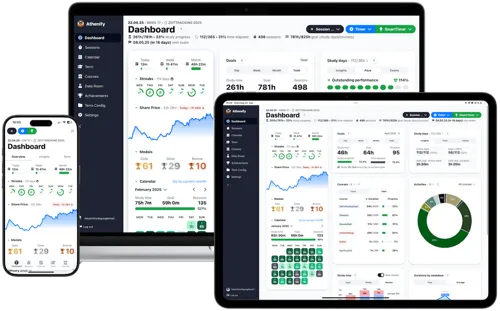
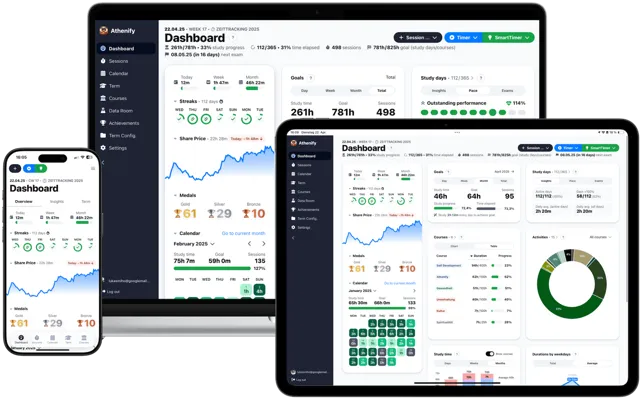
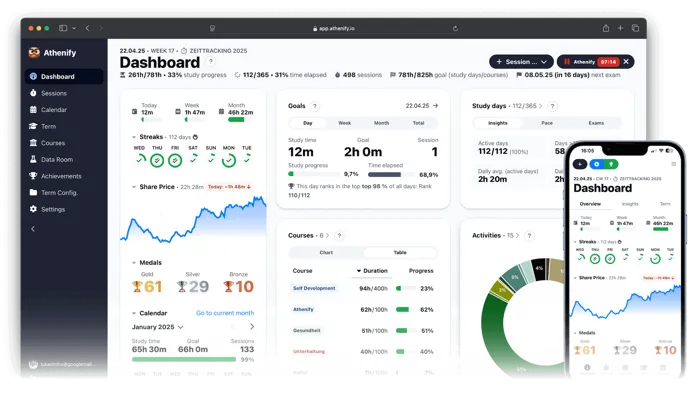
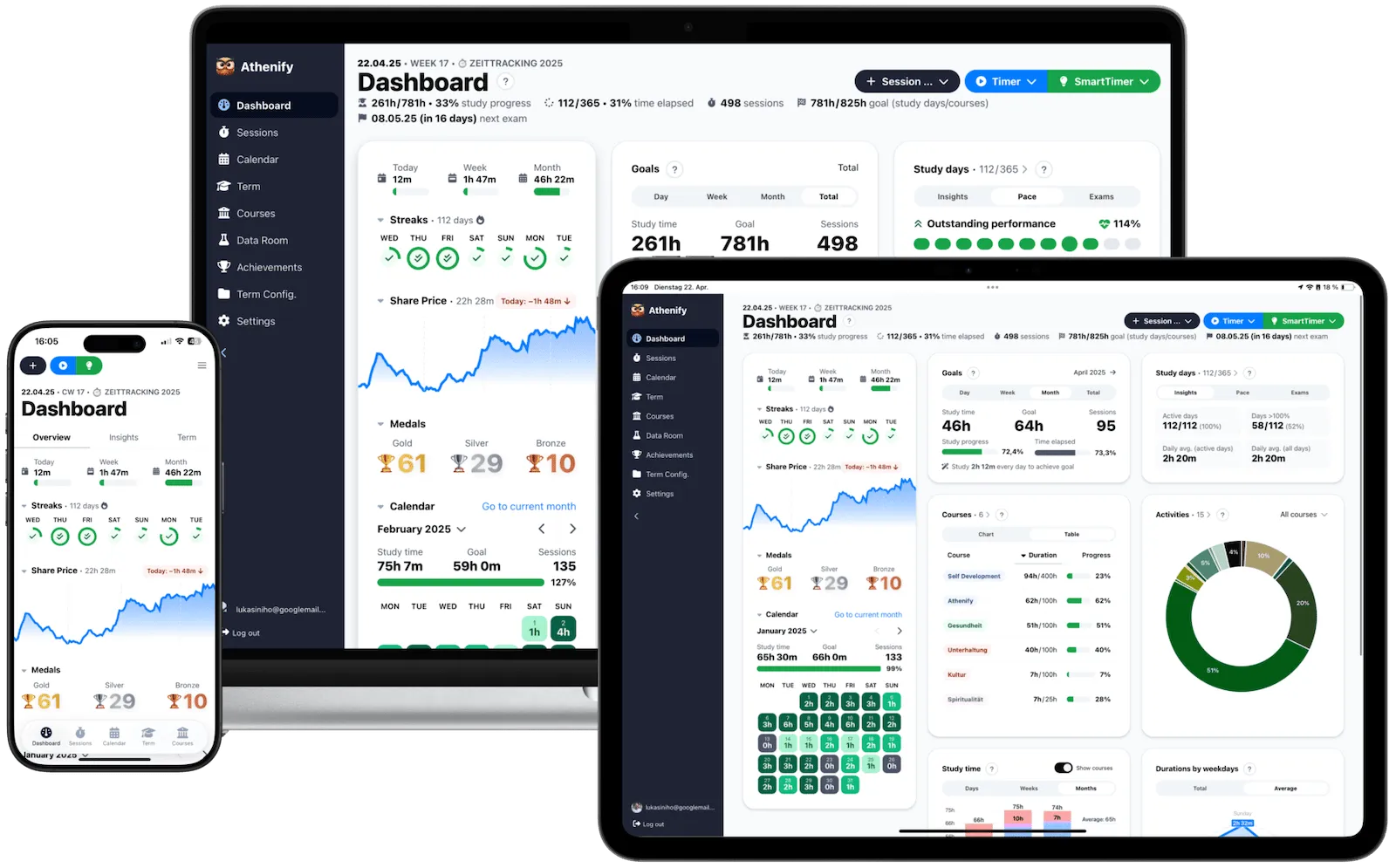
Work on chapters in parallel when possible. Contrary to the intuition that you should write chapters sequentially, many successful PhD students work on multiple chapters simultaneously. Write your methodology chapter while collecting data. Draft literature review sections as you read sources. This parallel approach keeps momentum going even when one chapter hits a roadblock. Track your time by chapter with Athenify to see which chapters are progressing and which are stalled--data reveals procrastination patterns that self-perception misses.
Managing your advisor relationship
Your advisor relationship is the most important professional relationship of your PhD. A supportive, engaged advisor dramatically increases your chances of completion. A disengaged or adversarial advisor can add years to your timeline. While you cannot control your advisor's behavior, you can manage the relationship strategically.
Come to meetings with documented progress. Advisors are more engaged and supportive when they see evidence of consistent work. Athenify's progress tracking gives you concrete data to share: "I worked 45 hours on the methodology chapter this month and 20 hours on the literature review." This transforms vague check-ins into productive strategy sessions. It also protects you if the relationship becomes difficult--documented hours of work demonstrate commitment regardless of advisor perception.
Set clear expectations early. Discuss feedback timelines (how quickly will your advisor return drafts?), meeting frequency, and dissertation format expectations before you begin writing. Mismatched expectations cause more advisor-student conflicts than actual disagreements about research. Write these agreements down and revisit them if circumstances change.
Fighting isolation and maintaining mental health
PhD work is inherently isolating, and isolation is a completion risk. Unlike coursework, where you see classmates regularly, the dissertation phase often involves solitary work in libraries, labs, or home offices. This isolation can lead to depression, anxiety, and a loss of perspective on your progress. Recognizing this risk is the first step toward managing it.
The period after qualifying exams and before consistent dissertation progress is the highest-risk window for abandoning the PhD. External accountability structures--writing groups, advisor check-ins, tracked daily writing goals--are most critical during this transition.
Build accountability structures. Join or create a dissertation writing group that meets weekly. Use Athenify's streak feature as a daily accountability partner--the psychological cost of breaking a 60-day writing streak is a powerful motivator even on days when the work feels meaningless. Share your progress data with a trusted peer or partner who can celebrate your consistency and flag when you go silent. For strategies on overcoming the resistance to starting, see our guide on how to start when you have no motivation.
Protect your non-work time. PhD burnout is rampant and often manifests as inability to write, cynicism about your research, or physical symptoms like insomnia and chronic fatigue. Set boundaries: evenings off, one full day off per week, regular exercise, and maintained friendships. Read about recognizing and recovering from burnout before it derails your progress. Sustainable effort across years beats unsustainable sprints followed by weeks of avoidance.
The final push: from draft to defense
The transition from writing to defending is a distinct phase that requires its own strategy. Once your full draft is complete, you enter the revision cycle: advisor feedback, committee feedback, revisions, more feedback, more revisions. This phase can feel endless if you do not manage it actively. Set clear deadlines for each round of revisions and communicate them to your committee.
Prepare for your defense deliberately. Your defense is a presentation and discussion of your research with your committee and sometimes external examiners. Practice your presentation multiple times. Anticipate the hardest questions your committee might ask and prepare thoughtful responses. The defense is rarely where dissertations fail--by the time your advisor approves you for defense, you are almost certainly going to pass. But preparation transforms the defense from a source of terror into a celebration of your expertise.
Track your entire PhD journey with Athenify. When you look back and see 1,500 hours of documented work across literature review, data collection, analysis, and writing--spread across years of disciplined daily effort--the defense becomes what it should be: the culmination of a remarkable achievement, not a source of anxiety.
Try Athenify for free
Start tracking your PhD thesis progress with Athenify
No credit card required.
No credit card required.