

How sleep drives memory consolidation
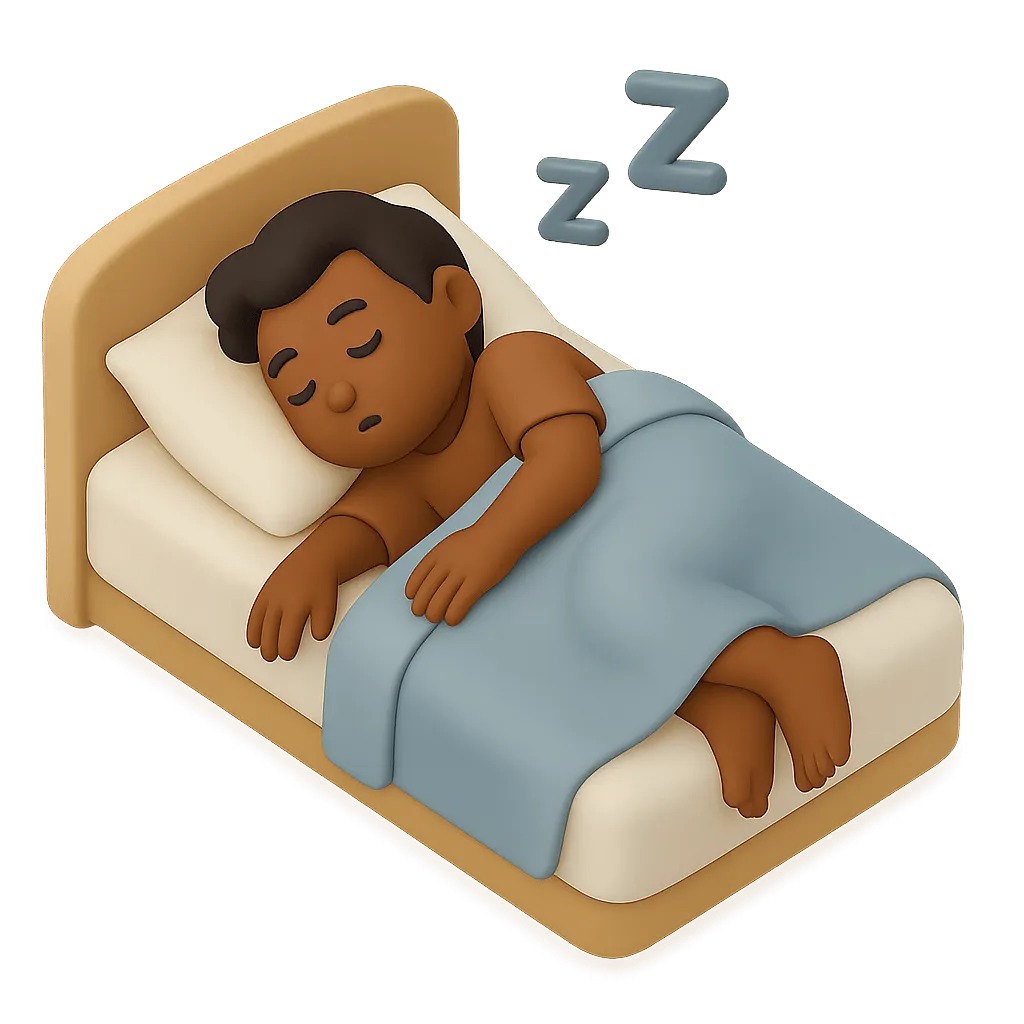
Most of what you call "studying" is only half the process. During the day, your brain encodes new information into short-term memory in the hippocampus -- a temporary holding area with limited capacity. The other half unfolds after you close the textbook. During slow-wave deep sleep, your hippocampus replays the day's experiences, transferring memories to the neocortex for long-term storage. This process, known as memory consolidation, literally rewires your neural connections to make knowledge permanent. For a deeper dive into the mechanisms at play, read our guide on how sleep affects learning and memory.
A study session without sleep is like writing a document and never saving it.
REM sleep plays a different but equally critical role. While deep sleep consolidates factual knowledge (like vocabulary and formulas), REM sleep strengthens procedural memories and creative problem-solving. During REM, your brain forms unexpected connections between ideas -- which is why you sometimes wake up with solutions to problems that stumped you the night before. Harvard Medical School data puts a number on the cost: sleep-deprived students retain up to 40% less information than well-rested peers, because both of these consolidation phases are disrupted when sleep is cut short.
The implications for students are profound. Every study session you complete is only the first half of the learning process. The second half -- the half that makes knowledge stick -- happens while you sleep. Skipping sleep after studying is like writing a document and never saving it: the work was done, but the results are lost. Prioritizing sleep is not laziness; it is the most efficient way to maximize your return on study time.
Why all-nighters destroy exam performance
No study strategy fails more reliably than the all-nighter. Pulling an all-nighter before an exam feels productive -- you are putting in maximum hours, after all. But performance data paints a different picture entirely. Across dozens of trials, students who skip sleep before exams perform significantly worse than those who study less but sleep well. The reason is that a fatigued brain cannot retrieve information efficiently, even if that information was technically encoded during the cramming session.
The cognitive impairment from sleep deprivation is staggering. After 17--19 hours without sleep, your mental performance is equivalent to having a blood alcohol concentration of 0.05%. After 24 hours awake -- a standard all-nighter -- you reach the equivalent of 0.10% BAC, which exceeds the legal driving limit in most countries. Your working memory shrinks, your reaction time slows, your ability to form logical arguments deteriorates, and your capacity for creative thinking virtually disappears. If you would not take an exam intoxicated, you should not take one after an all-nighter.
After 16 hours awake, cognitive performance begins declining sharply. By hour 24, your impairment is equivalent to a blood alcohol concentration of 0.10% — legally drunk in every US state. No amount of caffeine can compensate for this neurological reality.
There is also the problem of diminishing returns. After about 16 hours of wakefulness, every additional hour of studying yields progressively less retention. By 2 AM, you might spend an hour reviewing material and retain almost nothing. Meanwhile, had you slept during those hours, your brain would have been actively consolidating everything you studied earlier. The math is simple: if you must choose between one more hour of studying and one more hour of sleep, choose sleep every time. Build consistent study habits so you never face this choice in the first place.
Your circadian rhythm and peak study times
Your body runs on a roughly 24-hour internal clock called the circadian rhythm, which regulates alertness, focus, body temperature, and hormone production throughout the day. Understanding this rhythm is a secret weapon for students because it reveals when your brain is naturally primed for different types of cognitive work. Most students experience peak cognitive function -- including enhanced attention, working memory, and logical reasoning -- in the late morning (10 AM--12 PM) and again in the late afternoon (3--5 PM).
Within these windows, your brain also operates on ultradian rhythms -- 90-minute cycles of higher and lower alertness. This is why the Pomodoro technique (25--50 minute focused sessions with breaks) works so well: it aligns with your brain's natural attention cycles. Scheduling your most demanding study sessions -- problem sets, essay writing, new material -- during your circadian peaks, and reserving low-demand tasks like reviewing notes for your troughs, can dramatically improve retention and efficiency.
Your chronotype — whether you are a morning lark or night owl — is largely genetic. Instead of fighting your biology, schedule your most demanding cognitive work during your natural peak hours and use lower-energy periods for review and administrative tasks.
Individual variation matters too. Chronotypes -- whether you are a natural early bird or night owl -- are genetically influenced and affect when your cognitive peaks occur. About 25% of people are genuine morning types, 25% are evening types, and 50% fall somewhere in between. The key is to identify your personal pattern by tracking your study sessions with a study timer and noting when you feel most focused. Then build your study schedule around your biology rather than fighting it.
The power of strategic napping
A well-timed 20-minute nap outperforms a third cup of coffee in every measurable way. A 20--30 minute power nap after a study session can boost memory consolidation by up to 65%, according to research published in Neurobiology of Learning and Memory. NASA's fatigue countermeasures program found that a 26-minute nap improved pilot performance by 34% and alertness by 54%. For students, this translates to better recall, sharper focus, and more productive afternoon study sessions.
For maximum retention: study new material, take a 20-minute nap (set an alarm — longer naps cause grogginess), then review what you studied. In controlled trials, this protocol produced significantly stronger memory consolidation compared to studying without the nap.
The key to effective napping is keeping it short. Naps longer than 30 minutes risk entering slow-wave deep sleep, which produces sleep inertia -- that disorienting grogginess you feel after a long nap. Set an alarm for 20--25 minutes and nap in a slightly reclined position rather than lying flat, which helps you stay in lighter sleep stages. The ideal timing for a study nap is between 1 PM and 3 PM, when most people experience a natural dip in their circadian rhythm. Napping after 3 PM risks interfering with nighttime sleep.
For maximum benefit, try the "nap-study" protocol: study a block of material, take a 20-minute nap, then review the same material briefly after waking. This sandwich approach significantly outperforms continuous studying in retention tests because the nap provides a consolidation window that strengthens the memories formed during the first study block. Pair this with Athenify's focus timer to structure your study-nap-review cycles efficiently.
Sleep deprivation: the hidden epidemic among students
Nearly 40% of college students are chronically sleep-deprived, sleeping fewer than 7 hours per night on a regular basis. This is not just a comfort issue -- it is an academic and public health crisis. Large-scale studies reveal a strong correlation between sleep quantity and GPA: students who sleep 7--9 hours maintain significantly higher grades than those who sleep 6 hours or fewer. One large study found that each additional hour of average nightly sleep was associated with a 0.14-point increase in GPA.
The consequences extend far beyond academics. Sleep deprivation is strongly linked to anxiety, depression, and emotional dysregulation -- conditions that are already elevated among college students. Poor sleep impairs the prefrontal cortex, which governs emotional regulation, impulse control, and decision-making. This creates a vicious cycle: sleep deprivation increases stress and anxiety, which makes it harder to fall asleep, which leads to more deprivation. Breaking this cycle requires deliberately protecting your mental health and recognizing the signs of study burnout before they spiral.
Social and academic pressures make this especially difficult. Late-night socializing, early morning classes, part-time jobs, and the cultural glorification of "hustle" and "grinding" all conspire against adequate sleep. Yet the data points in one direction: sleep is not wasted time. It is an active investment in cognitive function, emotional resilience, and physical health. The students who achieve the most over the long term are not those who sleep the least -- they are those who sleep strategically and study efficiently during their waking hours.
Nutrition, exercise, and sleep quality
What you eat, when you move, and how you manage your environment all profoundly affect sleep quality. Caffeine is the most commonly used stimulant among students, and while it can temporarily boost alertness, its half-life of 5--6 hours means that a coffee at 3 PM still has half its caffeine active in your system at 9 PM. This significantly delays sleep onset and reduces the amount of restorative deep sleep you get. The solution is straightforward: set a firm caffeine cutoff at 2 PM and switch to water or herbal tea for afternoon energy. Learn more about managing your intake in our article on caffeine and studying.
Exercise is one of the most powerful sleep-enhancing tools available. Students who engage in moderate aerobic exercise 3--4 times per week consistently report better sleep quality, faster sleep onset, and fewer nighttime awakenings. However, timing matters: vigorous exercise within 2--3 hours of bedtime can elevate your heart rate and body temperature enough to delay sleep. Morning or afternoon workouts are ideal. Even a 20-minute walk between study sessions can improve both focus and subsequent sleep quality.
Your bedroom environment is equally important. Blue light from screens suppresses melatonin production by up to 50%, tricking your brain into thinking it is still daytime. Stop using phones, tablets, and laptops at least one hour before bed -- or use blue-light-filtering apps as a minimum. Keep your bedroom cool (65--68°F / 18--20°C), dark (blackout curtains or a sleep mask), and quiet. Eating large meals within 2 hours of bedtime forces your digestive system to work when it should be resting, so aim to finish dinner at least 2--3 hours before sleep.
How Athenify helps you study smarter and sleep better
Athenify is designed to help you finish studying earlier -- so you can protect your sleep without sacrificing academic performance. The built-in study timer helps you plan and execute focused study sessions during your peak daytime hours, eliminating the need for late-night cramming. The Pomodoro timer keeps you efficient by enforcing structured work-break cycles, so you accomplish more in less time and finish before your bedtime.
With Athenify's study tracking, you can see exactly how much time you spend studying each day and identify patterns. Are you consistently leaving work until the evening? The data makes this visible, so you can restructure your schedule to front-load study sessions. The streak feature motivates daily consistency -- when you study a little every day instead of cramming, you never need to choose between studying and sleeping. Athenify transforms sleep from a casualty of your study habits into a protected, non-negotiable part of your academic strategy.
Building a sleep-first study system
The most successful students design their study systems around protecting sleep, not sacrificing it. Building a sleep-first system starts with setting a non-negotiable bedtime based on when you need to wake up, then work backward to determine your study cutoff time (at least 1 hour before bed for wind-down). Calculate how many study hours you need each day and block them into your daytime schedule, prioritizing your circadian peak windows.
Track your adherence religiously for the first two weeks. Use Athenify to log every study session and note your bedtime. Review the data weekly: are you consistently finishing before your cutoff? If not, identify the bottleneck -- maybe you need to start earlier, study more efficiently with focused timer sessions, or reduce time spent on low-value activities. The goal is to build a system where adequate sleep is the default, not the exception. When sleep is protected, everything else improves: your focus sharpens, your study habits become more productive, and your grades reflect the compound benefits of a well-rested brain.
Try Athenify for free
Study smarter and sleep better with Athenify
No credit card required.

No credit card required.