The average student checks their phone 96 times per day and switches between tasks every three minutes. In this world of perpetual distraction, genuine focus has become so rare that those who cultivate it gain an almost unfair advantage. Three hours of truly concentrated study regularly outperforms six hours of fragmented, phone-interrupted work. This isn't productivity folklore – it's the core insight behind Cal Newport's influential concept of "deep work."

In his groundbreaking book, Newport introduced a concept that has become increasingly critical in our hyperconnected world: the ability to focus without distraction on cognitively demanding tasks. For students facing an unprecedented flood of notifications, social media, and digital interruptions, deep work isn't just a productivity hack – it's the difference between mediocre and exceptional academic performance.
Deep work is the ability to focus without distraction on a cognitively demanding task. It's a skill that allows you to quickly master complicated information and produce better results in less time.
– Cal Newport, Deep Work
Those who master deep work gain an almost unfair advantage – 3 hours of focused study beats 6 hours of distracted work.
Why Deep Work matters for students
The modern student faces a paradox: You have access to more information than ever before, yet it's harder than ever to learn deeply. Between classes, homework, study groups, internships, social commitments, and the constant pull of digital entertainment, sustained focus feels like a luxury you can't afford. But research tells a different story.
For students who check their phones every few minutes, this means they may never reach a state of deep concentration during their study sessions. Here's what happens when you master deep work.
Exponential learning
Shallow studying – highlighting textbooks while checking Instagram, half-listening to lectures while texting – creates the illusion of learning without the substance. Deep work transforms this entirely. When you focus without distraction:
- You understand complex concepts instead of just memorizing them
- You make connections between different areas of knowledge
- You develop genuine expertise in your field of study
The difference between surface-level familiarity and true understanding often comes down to whether you studied in fragments or in flow.
Dramatically better grades
A student who studies three hours in deep focus will typically outperform one who studies six hours with constant interruptions. The quality of your study time matters far more than the quantity. Top-performing students don't necessarily study more hours – they study more effectively. By tracking your deep work sessions with Athenify, you can ensure every study hour counts. For more strategies on maximizing your output, see our complete guide to student productivity.
Competitive career advantage
The ability to do deep work is becoming rare, precisely at the moment when it's becoming more valuable. Employers increasingly seek graduates who can tackle complex problems without constant supervision, produce high-quality work quickly, and learn new skills independently. In a workforce where most people are perpetually distracted, the focused few stand out dramatically.
Mental health benefits
Constant task-switching and digital distraction correlate with increased anxiety and decreased well-being. Deep work, by contrast, produces a state of flow that many find deeply satisfying. When you're completely absorbed in your task, time seems to fly, and you experience genuine enjoyment in your work. This isn't just productive – it's psychologically rewarding.
The ability to do deep work is becoming rare at exactly the moment it's becoming more valuable.
The enemies of Deep Work: modern distractions
Before you can achieve deep work, you need to understand what's preventing it. If distractions consistently derail your study sessions, our guide on how to stop procrastinating offers additional strategies. Let's be honest about the distractions facing today's students.
The smartphone problem
Your phone is specifically engineered to be addictive. Tech companies employ teams of psychologists and UX designers whose entire job is to make you check your device as often as possible:
- Push notifications – Each buzz triggers a dopamine response
- The urge to check "just for a second" – Which inevitably becomes minutes
- Study apps that ironically distract – Switching between apps breaks concentration
- Music or podcast management – Requires phone access, inviting other distractions
Who you are, what you think, feel, and do, what you love – is the sum of what you focus on.
– Cal Newport, Deep Work
If you check your phone even four times during a two-hour study session, you've essentially destroyed your ability to do deep work. The math is brutal: four interruptions means over 90 minutes of diminished cognitive capacity.
Social media: the Deep Work killer
Social media platforms are designed to maximize "engagement" – a euphemism for keeping you scrolling as long as possible. For students, this creates a particularly insidious problem. Taking a "quick break" on Instagram often turns into 30+ minutes. The dopamine hit of likes and comments makes studying feel boring by comparison. And FOMOFear Of Missing Out creates anxiety when you try to focus.
The multitasking myth
Many students pride themselves on multitasking. But here's the truth: Multitasking doesn't exist. What you're actually doing is rapidly switching between tasks – and losing efficiency with every switch.
People who multitask frequently also make up to 50% more errors compared to those who focus on one task at a time. The common culprits are familiar to every student: studying while watching Netflix, writing essays with multiple browser tabs open, listening to lectures while scrolling social media, and reading textbooks with music containing lyrics. Each of these scenarios feels productive but actively undermines learning.
Multitasking doesn't exist. What you're actually doing is rapidly switching between tasks – and losing efficiency with every switch.
Environmental distractions
Even with digital discipline, your physical environment can sabotage deep work. Noise and interruptions in dorms or shared spaces constantly pull your attention. Visual clutter competes for cognitive resources. Uncomfortable furniture breaks your focus. Poor lighting causes fatigue. Creating a sanctuary for deep work means addressing all of these factors – our guide to optimizing your study environment covers this in depth.
Practical strategies for Deep Work
Now that you understand what's standing in your way, let's build a system for achieving regular deep work sessions. This isn't about willpower – it's about creating an environment and routine that makes deep work inevitable.
1. Ritualize your Deep Work sessions
Top performers don't rely on motivation; they rely on systems. Create a pre-study ritual that signals to your brain: "It's time to focus."
- Put your phone in another room or a locked drawer
- Close all browser tabs except what you need
- Make a cup of tea or coffee
- Open Athenify and start your timer
- Take three deep breaths
- Begin studying
This sequence might seem excessive, but that's the point. Rituals reduce decision fatigue and create psychological triggers. Over time, your brain will automatically shift into focus mode when you perform your pre-study ritual – like a switch being flipped.
2. Time-block your Deep Work
Don't leave deep work to chance. Schedule specific blocks in your calendar and protect them fiercely.
| Time Block | Duration | Best For |
|---|---|---|
| Morning (7–10 AM) | 2–3 hours | Most challenging cognitive work |
| Midday (1–3 PM) | 1–2 hours | Medium-difficulty tasks |
| Evening (7–9 PM) | 1–2 hours | Review and practice problems |
Know your chronotype: Are you a morning person or night owl? Schedule your most important deep work during your peak cognitive hours. Track your energy levels in Athenify to identify your optimal study times.
3. Use the Pomodoro Technique (modified for Deep Work)
The traditional Pomodoro Technique uses 25-minute blocks – one of many proven study techniques you can adapt to your needs. For deep work, consider extending this based on your current capacity. Beginners should start with 25-minute focus sessions followed by 5-minute breaks – this builds the habit without overwhelming your attention span. As you progress to intermediate level, extend to 50-minute focus blocks with 10-minute breaks. Advanced practitioners can achieve the deep work sweet spot: 90-minute focus sessions with 15-minute breaks, aligning with the brain's natural ultradian rhythms.
Athenify's integrated timer makes this progression effortless to track.
4. Create a distraction-free environment
Your study space should be optimized for one thing: focused work.
| 🪑 Physical setup | 💻 Digital setup |
|---|---|
| Clean, organized desk | Phone on airplane mode or in another room |
| Comfortable chair | Distracting websites blocked (Freedom, Cold Turkey) |
| Good lighting (natural light preferred) | Only necessary tabs open |
| Moderate temperature | Email and Slack closed |
| Water bottle within reach | Notifications disabled |
5. Build Deep Work capacity gradually
You can't jump from constant distraction to 4-hour focus sessions overnight. Think of deep work like a muscle you're training.
Start with 25-minute sessions during the first two weeks, then extend to 45 minutes in weeks three and four as your focus muscle strengthens. By weeks five and six, you should be comfortable with 60-minute sessions, and from week seven onward, aim for the deep work sweet spot of 90 minutes.
Track your progress in Athenify to see your capacity growing over time.
6. Make your phone inconvenient
The most effective strategy is physical separation. Put your phone in another room, in a drawer with a combination lock, with a roommate or friend, or in your bag across the room. The specific method matters less than creating genuine friction between you and the device.
7. Choose the right soundtrack (or silence)
The audio environment for deep work deserves careful consideration. Silence works best for complex cognitive work like writing and problem-solving. White noise effectively masks environmental distractions without adding cognitive load. Instrumental music can help with routine tasks but may impair learning of new material. Music with lyrics generally reduces focus and should be avoided during deep work entirely.
Many students find that using the same playlist for every deep work session creates a Pavlovian focus trigger – their brain begins to associate that specific audio with concentration.
How Athenify transforms your Deep Work practice
Here's the uncomfortable truth: Most students have no idea how much time they actually spend in deep focus. They might sit at their desk for 4 hours, but between phone checks, social media, and daydreaming, the actual deep work might be less than 30 minutes.
Athenify changes this by making your focus visible, measurable, and improvable.
1. Intentional session starts
The moment you press "Start" in Athenify, something psychological happens. You've made a commitment. You're not just sitting at your desk hoping to study – you're actively declaring: "For the next hour, I'm doing deep work."
This creates accountability. The timer is running. You can see it. And you don't want to waste it scrolling Instagram.
Research in behavioral psychology shows that public or recorded commitments significantly increase follow-through. By tracking your session in Athenify, you're leveraging this effect to boost your focus.
2. Real-time awareness
During a deep work session, Athenify's timer shows you exactly how long you've been focused. This creates a positive feedback loop:
- At 15 minutes: "I'm building momentum"
- At 30 minutes: "I'm in deep work now"
- At 60 minutes: "I don't want to break my streak"
- At 90 minutes: "I'm achieving something special"
This awareness helps you push through the urge to check your phone "just for a second."
3. Pomodoro integration
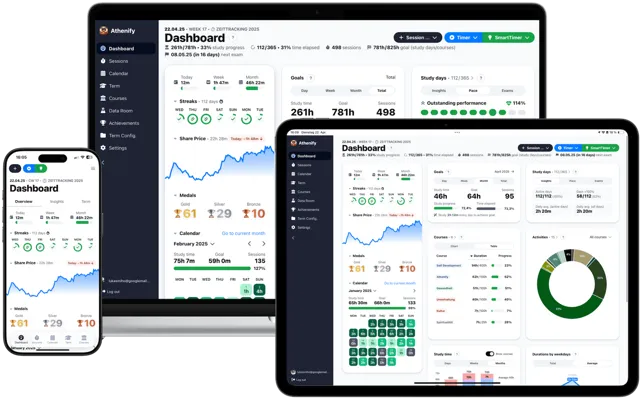
Athenify includes a built-in Pomodoro timer that's perfect for deep work. Set your focus duration – 25, 50, or 90 minutes – and let the timer automatically track your session. You'll receive break reminders to prevent burnout, and all sessions are saved to your study history. Unlike generic timers, Athenify's data persists, allowing you to see trends over weeks and months.
4. Category-based tracking
Not all study time is equal. Athenify lets you categorize your deep work sessions by subject (Math, Chemistry, English Literature), by task type (problem sets, essay writing, reading), or by intensity (deep work versus shallow work). This granular tracking reveals which subjects get your best focus – and which you're neglecting. Consider dedicating deep work blocks to different techniques: one session for active recall practice, another for spaced repetition reviews.
After a few weeks of tracking, you might discover that you're more productive in Math during morning sessions but better at writing in the evening. This kind of insight is impossible to gain through intuition alone. Use this data to optimize your schedule.
5. Streaks: the motivation engine
One of Athenify's most powerful features is the streak system. Study for your target hours for consecutive days, and your streak grows. Miss a day, and it resets.
Why this works: loss aversion means you don't want to break a 15-day streak – the psychological pain of losing that number is a powerful motivator. Visual progress makes seeing your streak number climb deeply satisfying, tapping into the same reward circuits that make video games compelling. And the emphasis on daily habit formation encourages consistency over intensity, which research consistently shows produces better learning outcomes. Read more about the psychology of streaks.
6. The share price: long-term motivation
While streaks measure consistency, Athenify's share price measures cumulative effort. Think of it like a stock price for your academic performance: more study time makes the share price increase, productive days push the price up, and missed targets bring it down. This gamification element taps into your competitive instincts – you want to see that number climb. Learn more about the share price system.
7. Medal system: celebrating achievements
Athenify awards medals based on your daily study performance. Bronze medals recognize hitting your minimum daily target – the baseline of showing up. Silver medals celebrate exceeding your goal significantly, rewarding extra effort. Gold medals mark maximum effort days, those rare sessions where everything clicks.
Small celebrations matter. Each medal is a dopamine reward that reinforces your deep work habit. Over time, earning medals becomes as satisfying as checking social media – but far more beneficial to your future.
8. Analytics dashboard
Athenify provides detailed analytics that reveal patterns invisible to intuition:
- Total study time – Weekly, monthly, and all-time views
- Average session length – Shows whether you're achieving true deep work
- Most productive times – Reveals when you enter flow most easily
- Subject breakdown – Exposes imbalances in your preparation
- Streak history – Tracks your consistency trends over time
These insights help you continuously improve your deep work practice.
Elite athletes track every metric. Why shouldn't students? Athenify gives you the data to treat your studying like a performance to optimize, not a chore to endure.
What gets measured gets managed – and what gets managed gets mastered.
9. Distraction reduction by design
Unlike study apps that ironically become distractions, Athenify is minimalist by design – aligned with the principles of digital minimalism for students. Quick session starts take just two taps. There are no social features or feeds to scroll through. No notifications interrupt your focus time. The clean, distraction-free interface does one thing exceptionally well: help you do deep work and track it.
Advanced Deep Work strategies
Once you've established a basic deep work practice, these advanced techniques will take you to the next level.
1. Batch shallow work ruthlessly
Identify tasks that don't require deep focus – checking email, responding to messages, administrative tasks, and simple scheduling – and batch them into designated "shallow work blocks," perhaps 30 minutes after lunch. This protects your deep work blocks from interruption.
The email solution is radical but effective: check email twice per day, at noon and 5 PM. That's it. Consider using an autoresponder explaining you check email twice daily. People will adjust their expectations faster than you might imagine.
2. Practice "Deep Work shutdown" rituals
Just as you have a pre-work ritual, create a shutdown ritual. Review what you accomplished. Log your session in Athenify. Write tomorrow's top three priorities. Close all work-related apps. Say out loud: "Shutdown complete."
This verbal declaration might feel silly, but it signals to your brain that work is genuinely done. The result is reduced evening stress and improved sleep – both of which enhance tomorrow's deep work capacity.
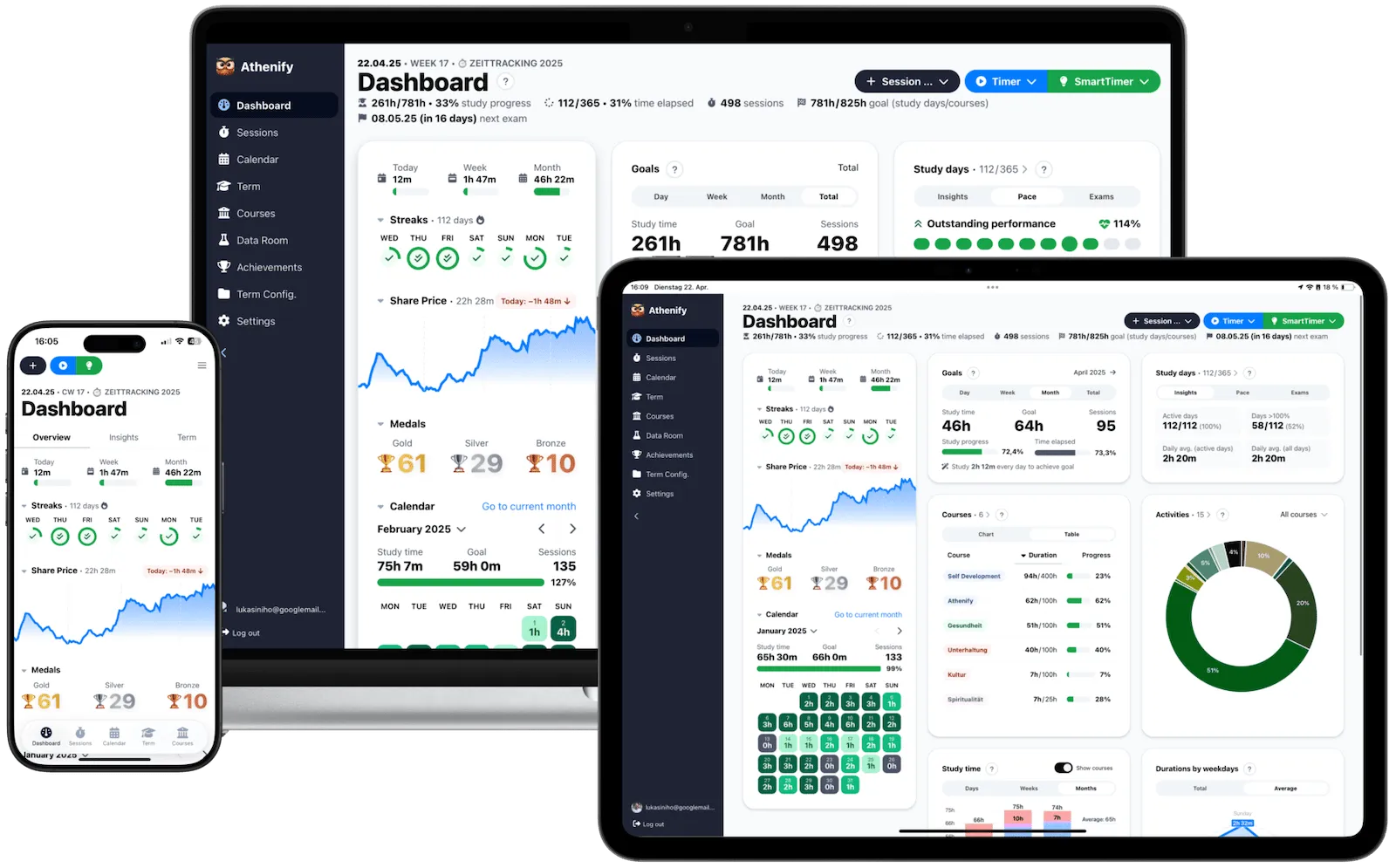
Try Athenify for free
Track your deep work sessions, build streaks that protect your focus time, and see exactly how many hours of real work you're doing.
No credit card required.
No credit card required.
3. Implement "phone jail" hours
Designate specific hours each day when your phone is completely inaccessible. Consider 9–11 AM for morning deep work, 2–4 PM for afternoon focus, and 8–10 PM for evening sessions. During these hours, your phone should be powered off, in another location entirely, or handed to a friend or roommate for safekeeping.
4. Use accountability partners
Find a study buddy who's also committed to deep work – a technique known as body doubling. Set up daily check-ins where you compare Athenify stats – seeing a friend's progress creates positive pressure. Conduct weekly reviews to discuss what's working and what needs adjustment. And don't underestimate the power of friendly competition: who can maintain the longest streak?
Research shows that people who share their goals with a friend and send regular progress updates are 33% more likely to achieve them than those who keep goals private. Leverage this by making your deep work practice social.
5. Conduct weekly Deep Work reviews
Every Sunday evening (or Monday morning), review your Athenify data:
| Metric | This Week | Last Week | Trend |
|---|---|---|---|
| Total deep work hours | ? | ? | ↑ or ↓ |
| Average session length | ? | ? | ↑ or ↓ |
| Longest streak | ? | ? | ↑ or ↓ |
| Most productive day | ? | ? | - |
Ask yourself:
- What enabled my best sessions?
- What derailed my focus?
- How can I improve next week?
6. Experiment with Deep Work schedules
Different students thrive with different rhythms. The bimodal schedule splits your day into distinct modes: deep work from 8 AM to noon, shallow work and breaks from noon to 5 PM, then another deep work block from 7–9 PM. This works well for students who have afternoon classes or obligations.
The rhythmic schedule prioritizes consistency by scheduling deep work at the same time every day – perhaps 2–5 PM. This approach builds habit through repetition and reduces decision fatigue. You never have to wonder when to study; it's simply what you do at that time.
The intense block approach concentrates deep work into one full day weekly – 6–8 hours of focused studying with a completely cleared schedule. This works well for complex projects that benefit from extended immersion.
Track which approach yields the best results in Athenify, then double down on what works for your brain.
7. Master the "hard start, jump back" technique
For exam preparation, try this counterintuitive method: Start with the hardest problem and work on it for 5–10 minutes. If you get stuck, jump to an easier problem rather than grinding unproductively. Here's the magic: your subconscious continues working on the hard problem while your conscious mind handles the easier task. When you return to the difficult problem later, you'll often find new insights have emerged seemingly from nowhere.
This approach maximizes deep work efficiency by leveraging background cognitive processing – one of the brain's most powerful and underutilized features.
Common Deep Work challenges (and solutions)
Even with the best intentions, you'll face obstacles. Here's how to overcome them.
"I can't focus for more than 10 minutes"
Solution: You're trying to do too much too soon. Start with 15-minute sessions for one week. Add 5 minutes each week. By week 10, you'll be at 60 minutes.
"I get anxious without my phone"
Solution: This is phone addiction (and it's very real). Gradually increase separation time. Start with 15-minute phone-free sessions. Recognize that the anxiety will pass after the first few days.
Studies show that the average person experiences measurable anxiety when separated from their smartphone – even for short periods. This is by design. Breaking this pattern requires intentional practice.
"My roommate/environment is too distracting"
Solution: Find your "deep work sanctuary." The campus library – particularly the quietest floor – often works well. Empty classrooms during off-hours provide isolation without commute. Local coffee shops during off-peak times offer ambient noise without chaos. Many universities have study room booking systems that guarantee private space.
Consistency matters as much as quality. Use the same place for deep work to build a strong mental association between that location and focused concentration.
"I feel guilty not being responsive to messages"
Solution: Set expectations. Send this to your group chats:
Hey everyone! I'm implementing deep work blocks from 2–5 PM daily to improve my studying. I won't be responsive during these hours, but I'll catch up afterward. Emergencies call only. Thanks for understanding!
People will respect boundaries you clearly communicate.
"I don't know if I'm actually being productive"
Solution: This is exactly why tracking matters. Athenify shows you objectively how much time you spent, when you were focused, and your consistency over time. The numbers don't lie – and they don't flatter. Data eliminates doubt.
Most students have no idea how much time they actually spend in deep focus. They might sit at their desk for 4 hours, but the actual deep work might be less than 30 minutes.
The Deep Work challenge: 30 days
Ready to transform your academic performance? Try this:
During the first two weeks, focus on building your foundation by committing to just one hour of deep work daily. Your primary objective is eliminating your phone from study sessions entirely – track every session in Athenify to establish accountability.
In weeks three and four, expand to two hours of deep work daily. This is when you should establish your pre-work ritual and start comparing productivity across different sessions to understand what conditions help you focus best.
From week five onward, push toward three to four hours of deep work daily. Now you're optimizing: experiment to find your peak productivity times, analyze the trends in your Athenify data, and continuously refine your approach based on what the numbers tell you.
Conclusion: from scattered to focused
We live in the most distracted era in human history. The average student is pulled in dozens of directions simultaneously, constantly context-switching, never fully present. But you don't have to accept this as normal.
Deep work is your competitive advantage. While your peers are studying ineffectively for six hours with constant interruptions, you can achieve more in two hours of genuine focus. While others struggle with complex concepts because they never fully concentrate, you'll develop mastery because you've trained your brain to go deep.
This isn't just about grades – though your grades will improve. It's about developing a rare and valuable skill that will serve you throughout your career and life.
Your future self is watching. Make them proud.
The path forward is clear: Eliminate distractions ruthlessly, especially your phone. Schedule deep work blocks and protect them fiercely. Use Athenify to track, measure, and improve your focus. Build gradually from 25-minute sessions to 90+ minutes. Review weekly and continuously optimize.
You can begin your deep work practice right now. Put your phone in another room. Close all unnecessary tabs. Open Athenify, start a timer, and study for just 25 minutes with complete focus. That's it. That's the beginning.
The question isn't whether you can do deep work. You can. Every student can. The question is: Will you?
The students who master deep work don't just succeed academically – they gain a superpower that makes everything else easier. They learn faster, understand deeper, and accomplish more in less time. And it all starts with a single focused session.


![Best Focus Music for Studying: A Science-Based Guide [With Videos]](/.netlify/images?fm=webp&q=80&url=%2Fimages%2Ffocus-music.png)