
A maioria das pessoas não tem um problema de tempo: tem um problema de atenção. Vivemos na era das distrações infinitas. Notificações, redes sociais, mensagens instantâneas e a tentação constante de verificar o telemóvel competem pela nossa atenção a cada segundo. A Técnica Pomodoro oferece uma solução elegante: em vez de tentar concentrar-se durante horas, compromete-te com apenas 25 minutos de foco total. É uma promessa tão curta que o cérebro aceita sem resistência.
Nos países lusófonos, o desafio académico é imenso. No Brasil, os vestibulares e o ENEM exigem meses de preparação intensiva. Em Portugal, os exames nacionais e os concursos determinam o futuro profissional. Em ambos os contextos, a capacidade de estudar de forma eficiente e consistente é o que separa quem atinge os seus objetivos de quem fica pelo caminho. A Técnica Pomodoro não é uma moda: é um método comprovado há mais de 35 anos.
O ciclo básico é simples: 25 minutos de trabalho focado, 5 minutos de pausa. Após quatro ciclos (chamados «pomodoros»), fazes uma pausa longa de 15 a 30 minutos. A beleza do método está na sua previsibilidade. Não precisas de decidir quanto tempo vais estudar nem quando vais parar. O timer decide por ti, libertando energia mental para o que realmente importa: o conteúdo que estás a aprender.
A neurociência explica o poder dos intervalos. Investigadores da Universidade de Toronto demonstraram que a alternância entre foco e descanso melhora tanto a retenção de informação como a capacidade de resolver problemas criativos. As pausas entre pomodoros não são tempo perdido: são o momento em que o cérebro processa e consolida o que acabaste de estudar. É durante o descanso que a aprendizagem se solidifica.
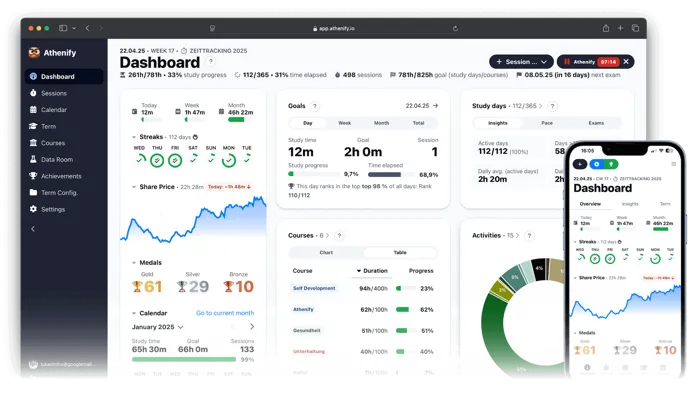
O Athenify transforma o Pomodoro numa ferramenta de análise pessoal. Cada sessão é registada automaticamente, com dados sobre duração, matéria e horário. Ao longo das semanas, constróis um mapa detalhado dos teus hábitos de estudo. Experimenta o temporizador de foco para sessões mais longas, ou o temporizador em ecrã inteiro para bloquear todas as distrações. Descobre a melhor aplicação de acompanhamento de estudo para estudantes.
A psicologia por trás do temporizador
O «efeito Zeigarnik» é o motor oculto do Pomodoro. A psicóloga Bluma Zeigarnik demonstrou nos anos 1920 que as tarefas incompletas criam uma tensão mental que nos impulsiona a terminá-las. Quando inicias um pomodoro, o teu cérebro regista uma tarefa aberta. Essa tensão natural ajuda-te a resistir às distrações até o timer tocar. Não é força de vontade: é psicologia a trabalhar a teu favor.
Porque é que começar é a parte mais difícil. A procrastinação está ligada à amígdala, a parte do cérebro que processa ameaças. Quando percebes uma tarefa como difícil ou aborrecida, a amígdala ativa uma resposta de evitamento. O Pomodoro desarma este mecanismo: 25 minutos não parecem ameaçadores. Ao reduzir o compromisso inicial, removemos a barreira emocional que nos impede de começar. E uma vez que começas, continuar é muito mais fácil.
A dopamina como aliada do estudo. Completar um pomodoro gera uma pequena libertação de dopamina, o neurotransmissor associado à recompensa e à motivação. Com a prática, o teu cérebro começa a associar o som do timer com satisfação. Estudar deixa de ser algo que «tens de fazer» e torna-se algo que o teu cérebro antecipa com uma dose de prazer. Este condicionamento positivo é um dos benefícios mais subestimados da técnica.
Experimenta sessões de 25, 35 e 45 minutos durante duas semanas. Regista a tua produção e nível de energia após cada uma. A duração onde produzes mais com menos fadiga é a tua duração ótima. O temporizador de estudo do Athenify permite-te testar diferentes intervalos automaticamente.
Monitorizar os teus pomodoros cria responsabilidade pessoal. «Estudei o dia inteiro» é vago e frequentemente exagerado. «Completei 8 pomodoros de Bioquímica» é preciso e verificável. O temporizador de estudo do Athenify regista cada sessão automaticamente, criando um histórico objetivo do teu esforço. Quando os resultados demoram a aparecer (como na preparação para concursos), ter dados concretos sobre o teu investimento mantém a motivação intacta.
Que técnica de temporizador te convém
Pomodoro, 52/17 ou blocos de 90 minutos: não existe uma duração universal. O Pomodoro clássico de 25 minutos é o melhor para tarefas repetitivas, memorização e para construir o hábito de te concentrares. O método 52/17 (52 minutos de trabalho e 17 de pausa) adapta-se a quem alterna entre tarefas variadas ao longo do dia. Os blocos de 90 minutos seguem o teu ritmo ultradiano e são ideais para trabalho criativo profundo. Testa as três durações com o temporizador de foco e fica com a que te deixa menos exausto ao fim do dia.
Quando NÃO usar o Pomodoro. O método tem limites. A resolução de problemas complexos, a escrita criativa e qualquer atividade em que entras em estado de fluxo beneficiam muitas vezes de sessões longas e ininterruptas. Se o temporizador toca exatamente no momento em que finalmente percebeste a matéria difícil, desligá-lo é a decisão certa. Saber quando seguir o temporizador e quando o ignorar faz parte do método.
Como aproveitar os 5 minutos de pausa. A pausa curta só funciona se for descanso a sério. Levanta-te, alonga, bebe água ou olha pela janela. Evita o email, as redes sociais e começar tarefas novas: isso não é descanso, é mais estímulo. O movimento físico é o que melhor restaura a atenção, nem que sejam trinta passos pelo corredor.
A pausa longa depois de quatro pomodoros. Ao fim de quatro ciclos completos, para entre 15 e 30 minutos. Come alguma coisa a sério, sai à rua, faz exercício leve ou fala sobre qualquer coisa que não seja o exame. Esta pausa longa evita a fadiga acumulada que as pausas de cinco minutos já não conseguem compensar.
Estratégias práticas para diferentes contextos
Para estudantes do ENEM e vestibulares: a maratona estruturada. A preparação para os grandes exames brasileiros requer meses de estudo diário. Planeia 10–14 pomodoros por dia, distribuídos entre as disciplinas. Usa os dados do Athenify para garantir que nenhuma matéria fica negligenciada. Após cada semana, revê a distribuição do tempo e ajusta conforme necessário. Os aprovados nos vestibulares mais concorridos não estudam necessariamente mais horas: estudam horas mais organizadas.
Para universitários: integrar o Pomodoro na rotina diária. Entre aulas, trabalhos de grupo e estudo individual, o dia do universitário é fragmentado. Aproveita os intervalos entre aulas para completar 2–3 pomodoros de revisão. Ao final do dia, dedica um bloco de 4 pomodoros ao estudo aprofundado. Esta consistência diária evita a acumulação de matéria antes dos exames e transforma o estudo num hábito sustentável.
Para quem trabalha e estuda simultaneamente: cada pomodoro conta. Se só tens 1–2 horas por dia para estudar, a eficiência é crucial. Três pomodoros diários bem focados (75 minutos efetivos) são mais produtivos do que 3 horas de estudo distraído. A chave é a qualidade, não a quantidade. Combina o Pomodoro com técnicas de estudo ativo como o recall ativo e a repetição espaçada para maximizar cada minuto investido.
Experimente o Athenify gratuitamente
Experimenta o temporizador Pomodoro do Athenify: gratuito, elegante e construído para transformar cada sessão em progresso mensurável.
Sem cartão de crédito necessário.

Sem cartão de crédito necessário.
A consistência vence a intensidade, sempre. Estudar 4 pomodoros por dia durante 30 dias (120 pomodoros) produz resultados incomparavelmente superiores a estudar 20 pomodoros num único dia e depois parar durante uma semana. O cérebro aprende através da repetição espaçada, não através de sessões maratónicas. O Pomodoro, combinado com o acompanhamento do Athenify, transforma o estudo de um evento esporádico numa prática diária consistente.